
Interior house painting
A standard interior repaint covers walls, ceilings, doors, door frames, skirting boards and cornices. You can have all of it done or only the parts that need it. Plenty of people just want the hallway and living areas freshened up, because that's where scuffs and marks build up fastest.
Most families stay at home while we work. We paint one area at a time, so the bedrooms are usable at night and the kitchen is out of action for as short a time as possible. In bedrooms and nurseries we use low-odour paint so the room can be slept in again sooner.
The sheen matters as much as the colour. Ceilings get a flat finish because it hides small imperfections. Living rooms and bedrooms usually suit low sheen, which wipes clean without looking shiny. Kitchens, bathrooms and laundries get semi-gloss or a dedicated wet-area paint, because steam and grease wear through flatter finishes quickly.
Feature walls and special finishes
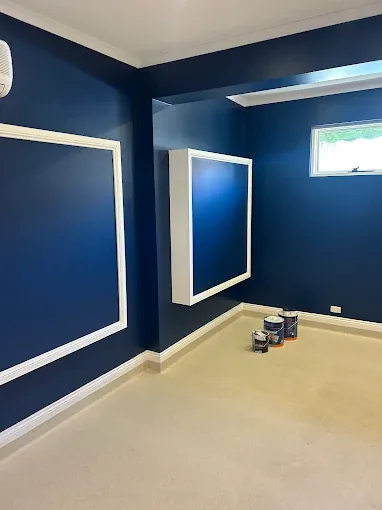
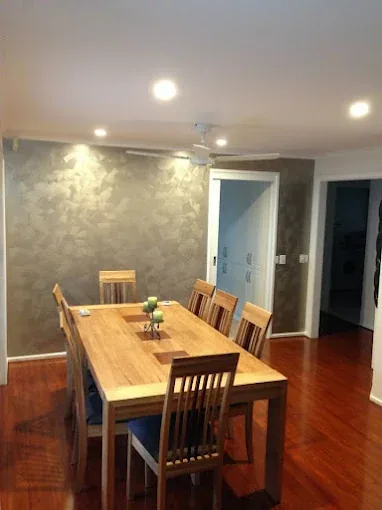
One darker wall, a metallic finish or mouldings painted in a contrasting colour can change a room without repainting all of it. The dining room above has a metallic wall that picks up the downlights at night. In the navy room, the white picture-frame mouldings were painted separately from the walls, which takes a steady hand and a lot of careful masking.
Wallpaper removal
We strip old wallpaper before painting, and how long it takes depends on what's underneath. Paper hung over sealed plaster usually comes away cleanly. Paper hung straight onto bare plaster can tear the surface as it comes off, and we'll tell you about that risk when we quote, not halfway through the job. If the plaster underneath turns out to be badly damaged, it needs a plasterer to repair it before we paint.
Exterior house painting
An exterior repaint protects the house as much as it changes how it looks. Once paint cracks, water gets into timber and render, and that does far more damage than faded colour ever will.
Salt and sun near the coast
Within a few streets of the beach, salt settles on every outside surface, and paint won't bond to it. Every coastal exterior we paint gets washed with fresh water before any scraping or sanding. West and north facing walls take the afternoon sun off Gulf St Vincent and break down first, so they usually need the most preparation. There's a simple test for chalking paint on coastal homes on our homepage that you can try yourself.
Weatherboard homes
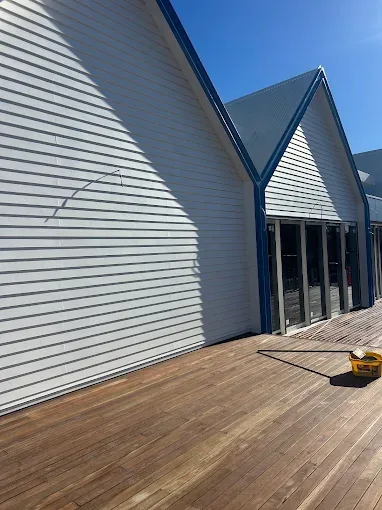
Weatherboards move with the weather, and the joins open and close through the year. We sand back loose and flaking paint, prime bare timber and rusting nail heads, and fill open joints with a flexible gap filler so the new paint doesn't crack along every seam. Boards that have rotted through need a carpenter to replace them first. If we spot any when we quote, we'll tell you.
Render and painted brick
Rendered walls have their cracks filled with a flexible filler and get a sealer before the top coats. Brick that has been painted before is repainted the same way. Face brick that has never been painted is a different decision. Once it's painted, it has to be repainted from then on, so we'll talk it through with you before you commit. Often the trims, eaves and gutters around the brick are what really need the work.
Eaves, fascias, gutters and fences
These parts weather faster than the walls, particularly in Glenelg North where the wind comes straight off the water. Metal fascias and gutters near the coast show rust early, so rust is treated and primed before any paint goes on. We paint timber and metal fences too. Doing the fence at the same time as the house keeps the colours matching.
Verandahs
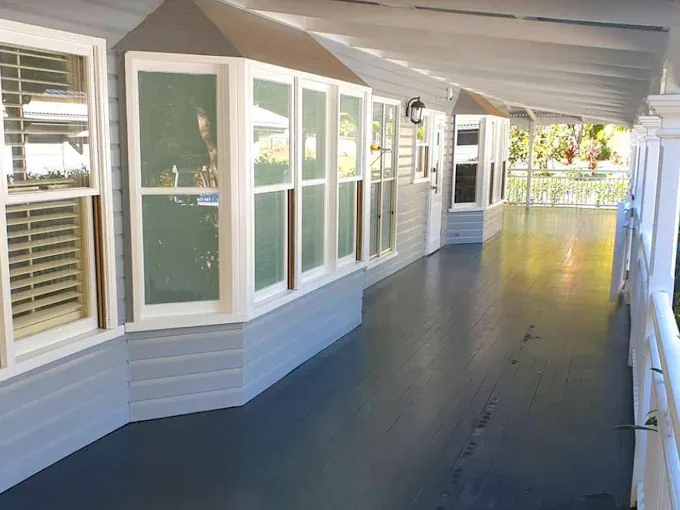
Verandah ceilings, posts, trims and painted floorboards are all part of an exterior job. The verandah at the top of this page had its floor repainted in a dark grey, with the weatherboards and bay windows done at the same time. We paint verandah floors that have been painted before, but we don't oil or stain timber decks.
If the roof has faded as well, it makes sense to plan both together so the colours work as one scheme. Our Colorbond and tiled roof painting page explains how that part of the job works.
Painting heritage homes
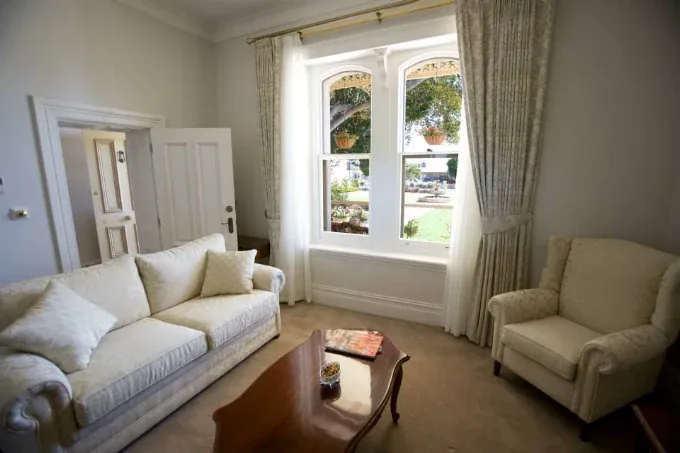
Glenelg South, Somerton Park and the older streets of Glenelg have a lot of villas and bungalows built before the Second World War. They have high ceilings, ornate cornices and decorative verandahs, and most have lead-based paint somewhere under the newer layers.
Any home painted before 1970 may contain lead paint. Sanding it dry spreads toxic dust through the house and garden, so we test old paint before preparation starts. Where lead is present, we scrape and sand with wet methods, contain the debris and keep children and pets well away from the work area.
Colour is the other half of a heritage job. A villa in a scheme that suits its age looks right from the street, and Nick can suggest period colour combinations as part of the free colour advice that comes with every quote. If your house is heritage listed or sits in a historic area, check with your council before changing the outside colours, because some changes need approval. For Glenelg and Somerton Park, that's the City of Holdfast Bay. We paint a lot of these homes, especially the older villas in Somerton Park.
Painting before you sell
Fresh paint is one of the cheapest ways to make a house look cared for in listing photos and at open inspections. We work with local real estate agents on pre-sale painting, so we're used to finishing in time for a campaign date.
Buyers notice what they see first: the front door, the entry and hallway, and the living areas. Marked walls, yellowed ceilings and strong feature colours are the usual things to fix. A neutral colour in a low sheen photographs well and lets buyers picture their own furniture in the room. Outside, fresh paint on the trims, fascias and front fence lifts the street view without the cost of a full exterior.
Tell us the photo shoot date when you get in touch and we'll plan the work around it.
Preparation is most of the job
The difference between paint that lasts and paint that peels within a couple of years is almost always the preparation. It's also where a cheap quote usually saves its money. This is what we do before any top coat goes on, and what goes wrong when each step is skipped.
Washing
Dirt, grease, mould and salt all stop paint from bonding. Exteriors are washed down, and kitchen walls and ceilings are degreased. Mould is treated so it doesn't grow back through the new paint.
Scraping and sanding
Loose and flaking paint is scraped back to a firm edge, then sanded so the edge doesn't show through the new coat. Glossy surfaces such as old enamel doors are sanded so the new paint has something to grip.
Filling and sealing gaps
Nail holes, dents and fine cracks are filled and sanded flush. Gaps around architraves, skirtings and window frames are sealed with flexible gap filler, which is what gives clean, sharp lines between the wall and the trim. Small patches, like a hole left behind by an electrician or plumber, are repaired as part of the preparation. Major damage such as a sagging ceiling or large areas of crumbling plaster needs a plasterer before we start.
Priming
Bare timber, new plaster, filled patches and treated rust all get a primer or sealer first. Skipping it is why repairs often show through the finished wall as patches with a slightly different sheen.
Protecting your home
Floors, furniture, garden beds and paving are covered before any paint is opened, and the work area is cleaned up at the end of each day.
How to tell when your house needs repainting
There's no set number of years. It depends on the paint used last time, how well it was prepared, which way the walls face and how close the house is to the beach. A house on the Esplanade will need attention well before a similar one a few kilometres inland in Glengowrie.
Outside, chalking comes first. Rub your hand across a sunny wall, and if it comes away white, the paint has started breaking down. Fading follows, usually on the west and north walls. Cracking and peeling are the stage where water starts getting in behind the paint, and that's when timber begins to rot and render starts to come away. Repainting at the chalking or fading stage costs less, because there's far less preparation to do.
Inside, the signs are easier to spot: marks that won't wash off, yellowed ceilings, worn paint around door handles and frames, and bathroom mould that keeps coming back. Hallways and children's rooms usually need doing well before the rest of the house.
If you're not sure, send us a few photos and we'll tell you whether it needs doing now or can wait another year or two.
What affects the price of painting a house
Every quote is worked out for that particular house, because two homes the same size can cost very different amounts to paint.
Condition is the biggest factor. A house with sound paint needs a wash, a light sand and two coats. One with peeling weatherboards, lead paint or cracked render needs much more preparation before any paint goes on. Height matters too. Two-storey homes and high ceilings need ladders, scaffold or other access equipment, and work at height is slower.
Then there's the detail. Each extra colour means more cutting in, and decorative cornices, fretwork and panelled doors take far longer than flat walls. Paint prices vary as well, and on a coastal exterior a better-quality paint is usually worth the extra cost.
The quickest way to a real number is a free written quote.
What homeowners say
Nick from All Coat Painting did a great job painting the full interior of our new home and has made it feel brand new.
Nicks responsiveness to emails, his advice on colours and the communication relating to the start date was very good.
Where we paint homes
Most of our house painting is in Glenelg, Glenelg North and Glenelg South, where we've been the local house painters in Glenelg for 38 years. Just south along the coast we paint a lot of the older villas in Somerton Park. Inland, the brick homes and units of Glengowrie and the houses around the racecourse in Morphettville mostly need eaves, trims and interiors done. We also paint holiday homes in Victor Harbor. You can see examples on our house painting projects page.
House painting questions
Can we stay in the house while you paint?
Yes, most people do. We work through the house one area at a time so you always have somewhere to sleep and cook, and we use low-odour paint in bedrooms.
How long will it take to paint my house?
It depends on the size of the house, the condition of the surfaces and how much preparation is needed, so we don't work to a standard time. When we quote, we'll give you an idea of how long your job will take and let you know if weather could affect an exterior.
Can you paint over wallpaper?
We don't recommend it. Wet paint softens the paste, and the paper can bubble or lift at the seams. Stripping it first gives a better finish that lasts.
Should I paint face brick?
Only if you're sure. Painted brick has to be repainted from then on, and it's very hard to go back to bare brick. If the brick is sound, painting the trims, eaves and gutters around it usually freshens the house up for less.
Do you fix cracked or damaged plaster?
We fill nail holes, dents and fine cracks as part of normal preparation, and patch small holes, such as one left behind by an electrician. Major repairs like sagging ceilings or large areas of crumbling plaster need a plasterer, and we can paint once they're done.
What paint finish should I use in a kitchen or bathroom?
Semi-gloss or a dedicated kitchen and bathroom paint. Both stand up to steam and regular wiping much better than low sheen or flat finishes.
Do you paint decks and verandah floors?
We paint verandah floors and timber that has been painted before. We don't oil or stain timber decks.
Can you help me choose colours?
Yes. Colour advice is free with every quote. Nick can suggest schemes that suit the age and style of your house and the light each room gets.
Do you work with real estate agents?
Yes. We do pre-sale painting for local agents and their vendors, and we plan the work around the photo shoot and open inspection dates.